
Graduate Degree Programs        

Agricultural Economics at Kansas State University ... it's bigger than you think.

Business, food & agriculture, society, government, the natural environment have changed immensely in the past decade, and the pace of change is quickening.  Firms are under relentless competitive pressures not merely to reduce cost and add value but to predict and react to these changes, as well. To keep up with population growth, the world food supply will need to double in 50 years.  Government agencies need specialists trained in the economics of natural resources and environmental issues so that they may best advise policy makers.  Overseas agencies need to network with specialists who understand both the intricacies of international trade and also the importance of international development.  Universities need to fill positions from programs with track records of producing outstanding candidates.

The Department of Agricultural Economics at Kansas State University is a leader in producing the talent to tackle these and many other issues. Our nationally-ranked graduate programs offer several options for students wishing to pursue a M.S. or Ph.D. degree.

M.S. Agricultural Economics  (on-campus)

M.S. Agribusiness Economics  (on-campus)

Master of Agribusiness M.A.B.  (distance education)

Ph.D. Agricultural Economics (on-campus)


FOR PROSPECTIVE STUDENTS

Ag Econ Faculty Profile 
Faculty Research
Recent Positions Taken by Graduates
Recent Dissertations
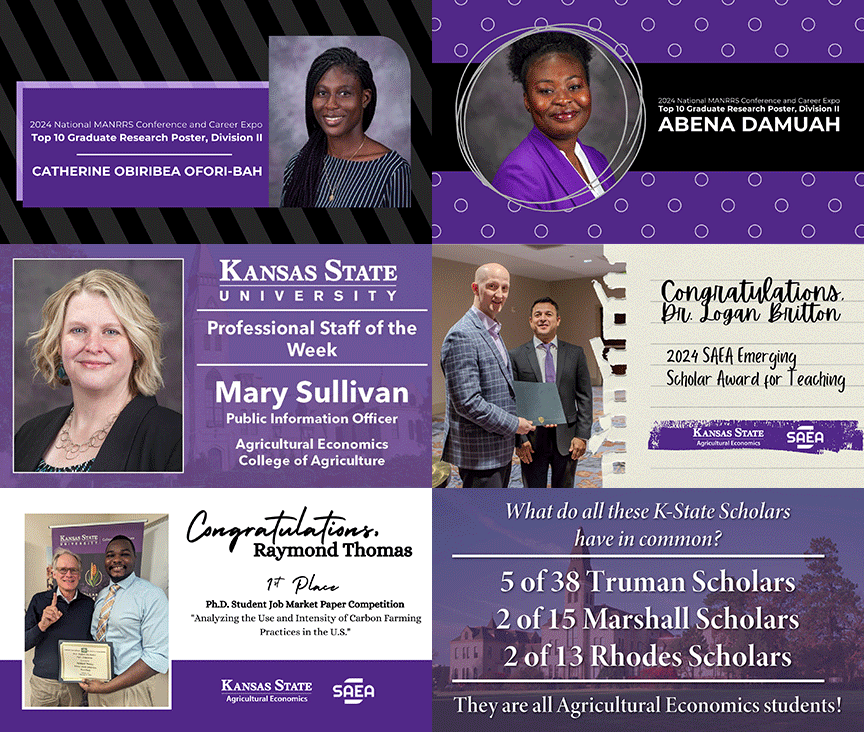
Why Choose K-State for Graduate Study?
APPLY NOW
 

Graduate School Application        

Follow the link to the Graduate School Website for more information and to apply online.
Graduate School Application and other Supporting required materials.

Forms        
Assessment of Student Learning        
    

Darrell Mark
K-State Alumnus
Assistant Professor
University of Nebraska


"The faculty are clearly a gifted, world-class group of academics yet are down-to-earth educators. As a graduate student I had the opportunity to work on a number of research, teaching, and extension projects with a variety of faculty. This diversity was instrumental in preparing me for my current position. Most
importantly, every faculty member placed the needs of students as their first priority."


Ag Econ Grad Students